Author – Professor Angela Gallop
Narrator – Sandra Duncan
Publisher – Hodder & Stoughton Ltd
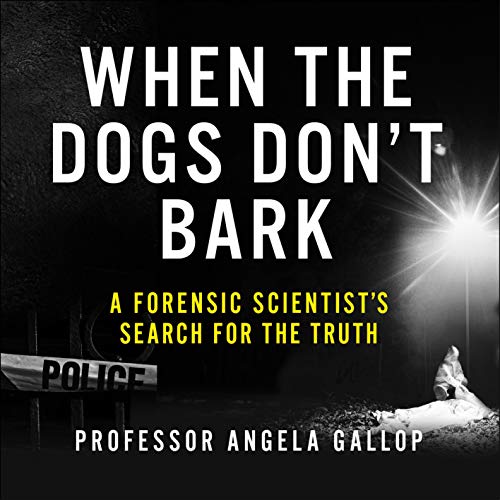
Date – 2019
Length – 10 hours 50 minutes
Stars – 5/5
Blurb
Kathy Reichs meets Fragile Lives in this fascinating and compelling memoir from the UK’s most eminent forensic scientist and some of the most fascinating criminal investigations she has worked on.
‘Finding the right answers is what forensic science is all about. What often matters even more, however, is asking the right questions.’
Never before has criminal justice rested so heavily on scientific evidence. With ever-more sophisticated and powerful techniques at their disposal, forensic scientists have an unprecedented ability to help solve even the most complex cases.
Angela Gallop has been a forensic scientist for over 40 years. After joining the Forensic Science Service, the first crime scene she attended was for a case involving the Yorkshire Ripper. As well as working on a wide range of cases in many countries around the world, she is now the most sought-after forensic scientist in the UK, where she has helped solve numerous high-profile cases, including the investigation that finally absolved the Cardiff Three, the Pembrokeshire Coastal Path murders and the killings of Stephen Lawrence, Damilola Taylor, Rachel Nickell and Roberto Calvi.
From the crime scene to the courtroom, When the Dogs Don’t Bark is the remarkable story of a life spent searching for the truth
Review
I was gripped by the title as, at first glance, I had no idea what it could mean. Is this a book about dogs? No, it is not, but the reasoning behind the title becomes clear fairly early on in the book. I like a title like this that doesn’t quite make sense and forces you to read the book. In this case, fortunately the book has the goods to back it up.
I have obviously gotten myself into a macabre state of mind having listened to this following All That Remains by Sue Black and, before that, Unnatural Causes by Richard Shephard. There is something undeniably fascinating about death and dying though. Professor Gallop is yet another example of a woman who has defied the chauvinistic tendencies of the sciences and made her way to the top of her field. Arguably the field of forensic science would not be where it is today without her. Starting her career in Botany and then as a researcher in sea slugs, the field of forensic science seems quite the leap.
Gallop recounts her biography well and keeps the reader interested without giving too much information that would just bore. She recounts some of the obstacles she has had to overcome to make headway in her field and her story is truly remarkable. It is easy to watch CSI and other such programmes and think that forensic science is automated and, with DNA, a perpetrator has to be pretty smart to evade detection. To some extent this may be true but I imagine that, even in today’s technological epoch, much care and attention to detail is required. Gallop explains the development of forensic science before DNA became a readily available and testable being.
Most importantly, the author has been involved in several high-profile cases. Her first case was a victim of the Yorkshire Ripper but, namely, she was involved in the investigation of the murders of Stephen Lawrence and Damilola Taylor. I remember these cases in the media and the sheer amount of error and misreporting was never evident to me. Gallop explains the cases extremely well and the issues around racisms and police practise become glaringly and painfully obvious. These cases just prove as examples of how forensics is so important in convicting the right person for the right crime.
There aren’t many elements of humour but who would expect that from a book about murder. Although there is one story which entertained me. Fairly early on in her career, she recounts a case where a man is admitted to hospital with abdominal pain. The surgeons find a peculiar fluid in his abdomen which perplexes everyone. Gallop’s expertise are called upon and the fluid is eventually determined to be semen of porcine derivation. Who would have thought bestiality could be light-hearted?
In summary, this is a fantastic book. Dark in parts but informative and evocative. I would certainly recommend reading or listening to this book particularly if you have a penchant for death and dying like I seem to have developed.
 The Kindle Book Reviewer