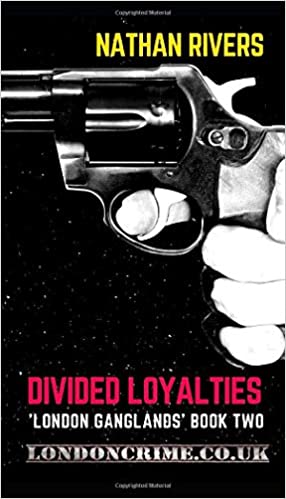
“Divided Loyalties” London Ganglands book 2Ascot, and Danny Slade is home for a funeral – His brother Jimmy was found dead in his flat in Richmond after committing suicide with booze and pills. Danny thinks his death just doesn’t add up, so he decides to return to London and find out what might have happened to make Jimmy want to take his own life. Danny’s suspicions become even greater as he is warned off by friends and those he used to work with in the ganglands of south London. He must tread carefully if he is to survive.A tough uncompromising novel of a brutal world where respect and loyalty from those around you are often the only things which will keep you alive.Be aware: This novel contains violence, torture and is written in a language which readers of a more sensative nature may find offensive and / or disturbing
Short Review
A fast-paced gangster thriller! Rivers strikes gold once again.
Review
I was so pleased to hear from Nathan Rivers after the success of Interview with a Contract Killer. His offer of an ARC for his new work was eagerly accepted.
Divided Loyalties takes place in a good few years before Interview but is just as gripping and exciting as its predecessor. Danny Slade has been sold a story about his brother’s suicide which he cannot stomach – something isn’t right here. The book follows his journey to get to the bottom of his brother’s death and takes us through infamous South London crime hotspots. There’s lots of action, a bit of gore and some romance thrown in for good measure.
Although this book doesn’t feature a twist quite like that in Interview, I found the general pace of the book more reader-friendly and kept my attention throughout. Given we have just had our first child and we are currently in the middle of a pandemic, it says something about Rivers writing that I continued to want to read this, despite limited time and growing fatigability. It was a welcome distraction!
Once again Nathan, I salute you for your efforts here and can award no less than five stars! I look forward to book 3.
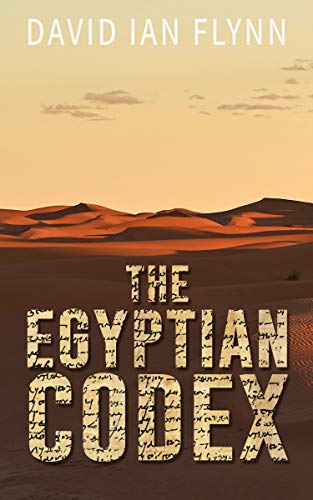
Michael is an academic of sorts, a cataloger of ancient texts, everything from Greek to Egyptian. To some, it’s not exactly the most glamorous of professions, but for him it is a worthy endeavor. One day, a seemingly innocuous manuscript lands on his desk. Perhaps it’s a fake, perhaps not. Little does he know that this aged papyrus would launch him on a brazen adventure across multiple countries and linking many eras — involving not only himself, but also a plucky American scientist, Anna, and the promise of a discovery that might shake our knowledge of what happened 2000 years ago to its very core.
Short Review
A fast-paced educational thriller.
Review
I loved this book. Having been a Dan Brown fan (I know, guilty as charged), I really enjoyed books that mix history with fiction. In this case, Flynn makes papyrology cool. I have never read about the subject before, but I found Flynn’s commentary on ancient languages really informative. I felt like I learnt something reading this book.
The action is written just write. Not too blockbuster so it allows you to absorb some new ideas but fast enough that you don’t get bogged down thinking you’re reading a textbook. There are a few twists littered throughout the book which I felt were well-conceived and the reader doesn’t seem them coming.
I was just disappointed to find that there are yet to be any new instalments. Hopefully, this is something Flynn is working on.
I would definitely recommend reading this. A comparison to Dab Brown may be helpful in conveying the general concept of the book but, in some ways, I think this downplays Flynn’s originality and hard work in researching the area.
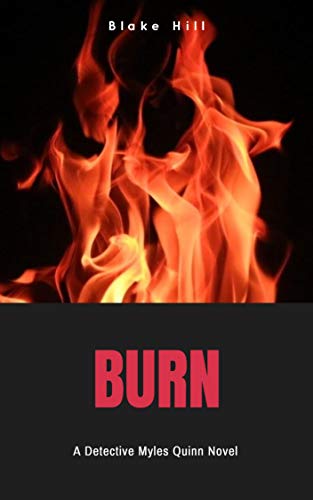
Has an arsonist from a 10 year ago resurfaced? The three fires were Detective Myles Quinn’s first case as a rookie detective. 10 years later, the arsons remain unsolved and a new rash of fires in the same businesses reopens the cold case. The current fires look the same as 10 years earlier, except for one thing…now the business owners have been murdered. Detective Quinn and his rookie partner must race against time to stop an arsonist that has turned killer.
Brief review
A well-written and well-paced crime novel. A great read.
Review
Detective Myles Quinn has a chip on his shoulder. A series of fires 10 years ago remain unsolved and he struggles to accept this. He has a drink problem and generally doesn’t seem to be a likeable person. A rookie detective joins him in the investigation of what seem like mirror crimes but with a murderous turn.
I have to say, I wasn’t expecting to like this book as much as I did. I think it is really well written. Lots of dialogue which I find helps to get the story moving and keeps you hooked. When I think of the actual plot then it’s pretty okay but Hill manages to elevate this with his great story-telling. I can’t really sing its praises enough.
I’m a sucker for a good twist as my readers (if there are any) may have already gathered. This book certainly provides a good fix in this respect. I found myself looking forward to opening my Kindle to read this book every night and I finished it within a few days which speaks to the author’s talent.
What I liked
Fast-paced and good plot development. There’s no nonsense in this book. It gets straight to the point and there’s no superfluous detail which can sometimes detract from the story. It’s a great read.
What I didn’t like
At the beginning of the book, the narration seems to flip between first and third person. I’m being pedantic I suppose as it didn’t stop me reading the rest.
Overall
I thoroughly enjoyed this book and hope Hill has plans for another instalment. I think Myles Quinn is a good character and the author has certainly spent time and effort in developing him and writing a great story.
It’s included in Kindle Unlimited so, given the current situation, you don’t really have an excuse not to read it.
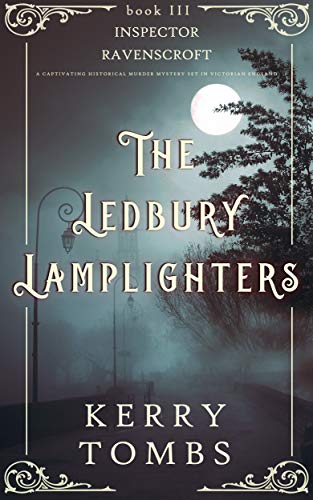
Once again, I have devoured a Kerry Tombs murder mystery. I can’t remember how I stumbled across Tombs’ work but I am so glad I did. He just has a way of getting the reader to feel like they are being swept up into the story. His protagonist, Detective Ravenscroft, has now moved to Ledbury and, once again, a suspicious death arouses his attention. The story unfolds with plenty of twists and turns to keep you hooked.
There is also a great reference to true historic events and the reader is left to make up their own mind at the end. I really liked this touch of blending fiction with non-fiction – it just seemed to make the whole story even more believable.
What I liked
The way Tombs writes is not dissimilar to Conan Doyle and gives those hardcore Sherlock fans a little taste of something similar but not a carbon copy. Chapters are short enough to keep your interest but long enough to build suspense when needed. Tombs command of the English language is impressive and he is able to write as if we were in the 19th century convincingly.
Favourite Word
“the fluck” – I’m struggling to find a definition. I have found both ‘poverty’ and a treponemal liver disease. Either way, I like the word and if anyone knows its’ true meaning, I’d be grateful if you could enlighten me.
Leewood’s mother says that nothing can cure her when ‘the fluck’ has already set in. I suppose either of the possible definitions above could fit.
What I didn’t like
There was nothing I didn’t like about this book hence the 5-star review. I was worried this was the last in the series, but I am glad to see that there are another three to go at least.
If you’re sat at home during this restless time, I implore you to get lost in a Kerry Tombs’ novel. It may only take you a few hours to finish it, but you’ll be glad you did.
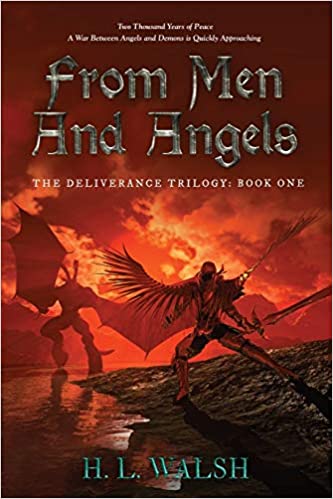
From the dawn of man, the war between Demons and Angels has ravaged the land. Two thousand years of peace has lulled the people into a false sense of security. Malach is on a journey to find his place in the world and pick a side in the war that is quickly approaching, meeting unlikely allies along the way.
Short Review
Game of Thrones meets Angelology!
Review
First of all, many thanks to HL Walsh for sending me an ARC for this book. Not my usual genre again but I thoroughly enjoyed the read. This book takes us on a journey from a rural village to a big city and along the way we learn more about the main character, Malach. A war between Angels and Demons has long been thought over however this is, of course, not the case. I’m not a believer but I find religion as a concept fascinating and, on an individual level, there are many captivating stories and ideas to be found in religious texts. The idea of Angels and Demons is, of course, deeply rooted in Christian dogma but I was relieved that the author doesn’t push this too strongly in the book. I felt this was pitched just right.
There are elements of Game of Thrones in here which I appreciated and the central tenant of the war between good and bad reminded me of Danielle Trussoni’s Angelology (I think an underrated book in itself). I don’t think the author is borrowing ideas at all, it’s just the images conjured up in my head whilst reading. The author has certainly created a unique masterpiece. For a fantasy book, the author builds the scenery really well and creates a whole new world within his pages. This is the first in a series and, indeed, there are many questions that I am thirsty to be answered.
What I liked
The main character, Malach, I find believable and there are many strands to his personality. I like how the author delves into his past and the unknowns. There is a fantastic twist around halfway to three-quarters of the way through which really makes the reader want to keep on reading. The ending is also fulfilling but leaving enough to be answered in the next instalment.
There is a budding love interest which adds to the story and I imagine will grow throughout the next instalment. Malach’s relationship with his close friend / step-brother, Daziar, is well-developed and helps to keep the fantasy element grounded.
What I wasn’t so keen on
Like other books in this genre, this story is a bit slow to get off the ground. I think part of this is to allow the author to describe the characters and world he has created but in parts I felt myself struggling along. If there hadn’t been the twist, which was timed just right, I think I would have found these quite heavy going. There are a few cases where a main character seems to acquire some knowledge or important information out of nowhere and this can be disappointing sometimes. It’s not too often and I don’t think it detracts from the hard work the author has invested the majority of the manuscript.
Summary
All in all, I enjoyed the book. If you’re a fan of fantasy, you’ll like this book. I look forward to finding out what book two in the Deliverance series has to offer.
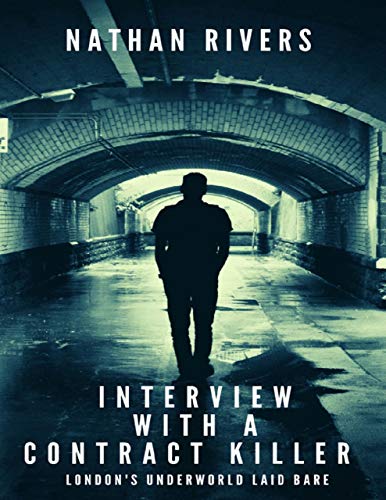
Francis “Frankie” Cole is a convicted London gangland killer who will never again see the outside of Broadmoor secure psychiatric hospital having received a whole of life tariff for his crimes. David Palmer gains permission to interview Cole for a book although he quickly becomes more interested in the information he cannot include. Neither Palmer nor Cole are ready for the secrets revealed during their time together. Gritty, hardboiled and unsanitized, characterized by cynicism, fatalism, moral ambiguity which may offend those of a more sensitive nature. A captivating and provocative narrative, an intriguing and multifaceted plot, intense and thrilling to the last word.
Short Review
A gritty, gangland gripper with an incredible twist – a crime lovers must-read!
Review
I loved this book. It’s as simple as that. David Palmer comes to Broadmoor to interview Frankie Cole in a Mindhunter-esque fashion and, on the face of it, the story is well-conceived and generally well-written. It starts off with Palmer’s journey over to Broadmoor from Wales where he lives. I always think it is nice when authors include the rest of the UK in their books, not just London (there is more to our great country you know). A rapport is built between Palmer and Cole slowly and the reader is allowed the time to understand their relationship. The book is filled with flashbacks to Cole’s heyday in the East End of London and this forms the basis of the interview. He recounts his tales working for some eminent gangsters and how he ended up in his position. These vignettes, in themselves, prove enough on their own, to keep the reader interested.
Initially, I thought this was just a fairly good book – murder, corruption and gangsters are the usual suspects. No problems with the plot and it kept my attention. A twist about halfway through provided enough impetus for me to want to read on but nothing prepared me for the shock finale. The final chapter proved to be the most captivating and I actually read this twice. Not because I didn’t understand it but because I wanted to re-live the moment when the author so beautifully shatters your conceptions of the story. I don’t think I have ever read a book with such a shocking twist so very near the end. What an absolute curveball! There’s always the risk that the twist is underplayed or feels like an ‘it was all a dream’ moment when the reveal is very late-on but Rivers doesn’t fall into this trap. You can tell care has been taken to lead up to this climax and the reader feels nothing but fulfilment.
What I liked
The final twist was, of course, my highlight. I did not see this coming one bit and it completely blindsided me. I absolutely love books that do this. Rivers develops Palmer as a main character well and I’m hoping to learn more about his background in the next book.
What I wasn’t so keen on
There were a fair few typographical errors and I also felt that some sentences were too long, lasting half a page in one case. I didn’t find these small issues to detract from the overall readability of the book. This is, indeed, the only reason I have not given it the full five stars.
Summary
For a first-time author (as I believe Rivers to be), this is an excellent piece of work. It has all the elements a great crime story needs and Rivers excels, particularly, in providing sucker-punching, jaw-dropping plot twists. I can’t wait to read the next instalment.
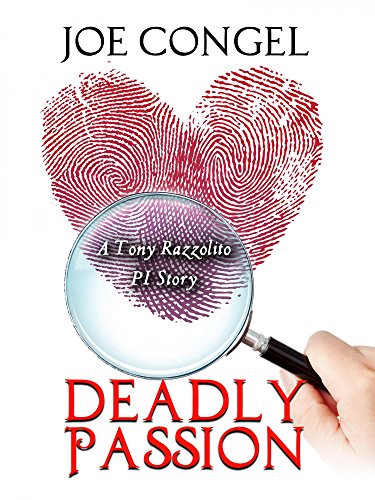
PI Tony Razzolito pieces together long forgotten clues as he tries to solve the twenty-year-old murder of a young high school grad, that is somehow linked to a recent brutal killing.
But as he works through the list of suspects, he finds himself battling the seasoned homicide detective who couldn’t solve the murder the first time around.
Can the two forge a partnership long enough to solve both murders, or will their egos prevent a killer from being caught?
Review
This book is excellent. Fast paced and gripping throughout. The story is about a private detective, Razolito, who is called in to assist on the resolution of a murder in Charlotte, North Carolina. It just so happens that the victim has been murdered in a very similar fashion to a cold case from 20 years ago and the detective working that case, Cahill, has been assigned the new case. There is a difficult dynamic between Razzolito and Cahill as expected and Congel writes this very well.
I sometimes struggles with books that are telling more than one story at a time as I can get lost in the timeline. Congel does a great job of keeping you on track and bringing together these two investigations to a dramatic climax, which I didn’t see coming. The characters are believable and the story is well thought out.
It is books like this, written by authors who you have never heard of or seen in the bookstore, that really excite me. This man has a genuine talent for storytelling and I am sure there are many more out there too who don’t get the recognition they deserve.
What I liked especially
Suspense and revelations – Congel has a talent for keeping the reader interested and not giving away too much that the story is predictable. This book starts out with a murder scene and keeps the tension going. I really liked the relationship between Razzolito and Cahill and how this story of ego is translatable to pretty much any workplace. Karen is a great counterpart to Razzolito and her insight into his difficult cases is welcome.
What I didn’t like
It’s very difficult for me to find any criticisms. This was a well-written, well-proofread novel with a sound plot and exceptional story-telling. I wasn’t aware that this was the second novel in the series and I will certainly be reading the others.
I thoroughly enjoyed this book and I am sure you will too. If you are a lover of crime fiction, you have to read this book.
Publisher – Weidenfeld and Nicolson (Penguin for later editions)
Date – 1968
Rating 5/5 (for being classic – but 1/5 for its depiction of Franklin)
Background
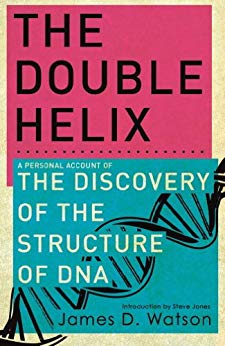
As a geneticist, the discovery of the structure of deoxyribonucleic acid (DNA) is probably the greatest achievement in my field to date. This book is written by one of the scientists who was instrumental in the discovery and chronicles his involvement. For those who are not aware, DNA is made up of repeated units joined together by phosphate groups in a double helix, like a staircase. The steps of the staircase are made of four types of chemical which occur in a sequence. Understanding the structure of DNA has allowed scientists to work out its function and how it is able to code for amino acids and thereby proteins.
The story starts in 1951 when James Watson, a 23 year old American post-doctoral researcher, met Francis Crick, an eccentric 35 year old Brit at Cambridge. The two would become household names for their discovery of the structure of DNA and thereby allowing the understanding of its function. It amazes me that it wasn’t until 1944 when DNA was really starting to be considered as an important molecule. Prior to this, all efforts were put into understanding proteins which were seen as much more complex and exciting than a simple molecule made up of only four component parts. How could such a simple molecule be of any relevance? Erwin Schrodinger wrote ‘What is Life’ in 1944 where he was a pioneer of the theory that genes were key components of living cells. At the time, genes were not understood and it was generally accepted that genes were specialised proteins. It was, indeed, Schrodinger’s masterpiece that led to Crick’s defection from physics into biochemistry and, ultimately, genetics. Experiments in the US by a bacteriologist, O.T. Avery, in 1944 were the first to suggest DNA as the main player in heredity as he transfected bacteria with DNA from other cells and saw its dramatic action. As with all discoveries in the field, the gravity of Avery’s work wasn’t immediately appreciated.
Franklin
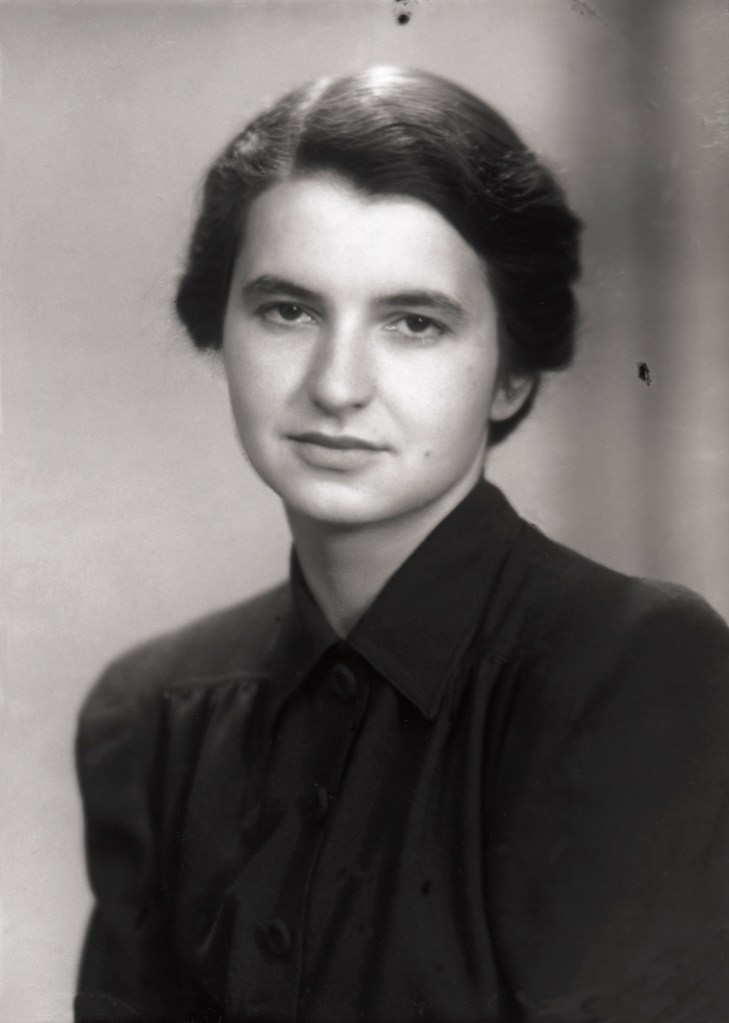
Rosalind Franklin was born in 1920 to a British Jewish family in London. As a child, she was described as ‘alarmingly clever’ and actually left secondary school with a scholarship of £30 per year to attend university, which considering the time and attitudes towards female education, was astounding. She studied chemistry at Cambridge and eventually received her PhD in 1945. Surprisingly, her PhD thesis had been about the porosity of coal and her work went some way to develop better gas masks. After searching for jobs for “a physical chemist who knows very little physical chemistry, but quite a lot about the holes in coal”, she went to Paris where she began working with X-ray diffraction (shooting X-rays at a target and deducing by their displacement, what kind of structure it may be).
In 1951, she returned to England and worked at King’s College, London under the supervision of Sir John Randall. An important collaborator was Maurice Wilkins, who was already working on X-ray diffraction but was on holiday when Franklin arrived in 1951. Randall was, by all accounts, a pretty awful supervisor. He essentially gave Franklin the X-ray work along with a PhD student, Raymond Gosling, to continue looking into the structure of DNA. He did this without telling Wilkins that he was essentially kicked off the job. Of course, this unorthodox management technique did not go down well. Franklin and Wilkins had a famously fractious relationship.
When Franklin had finally had enough of Wilkins ego, she decided to leave in 1953 to continue studies at Birbeck College, London. It was at this time, that Wilkins presented the infamous ‘Photo 51’ to Watson and Crick. Franklin and Gosling had taken this photograph in 1951 but were yet to publish it. As Franklin left, Wilkins became Gosling’s new supervisor and Randall insisted all of their results were shared and DNA work remained at King’s, essentially, providing him with Photo 51. This photograph proved to be the talisman that spurred Watson and Crick on to crack the enigma. Although, they used many other techniques (namely molecular modelling which Franklin was opposed to), Photo 51 was certainly a large player in their discovery. Wilkins never made Franklin aware that he would show this photograph to Watson and Crick and reading this story does, unfortunately, smack of underhand tactics and inherent sexism. They did receive some credit, albeit inconspicuously, in Watson and Crick’s Nature paper as a footnote…
“having been stimulated by a general knowledge of” Franklin and Wilkins’ “unpublished” contribution.”
At the time, there was a rush to discover the structure. Linus Pauling, an American molecular biologist, had been working on DNA at the same time and had submitted a paper describing what he thought the structure of DNA was in 1952 but this was a triple helix and had the phosphate groups on the inside. He was an American and he did not have access to the X-ray diffraction photos which guided Watson and Crick who were in a rush to correct him and beat him to the structure. It is also said that Sir Lawrence Bragg, who pretty much invented X-ray diffraction and was director of the Cavendish laboratory in Cambridge was also pretty miffed that Pauling had beaten them to the discovery of the alpha helix structure of proteins some years previously. This gave Bragg the impetus to push Watson and Crick into understanding the structure of DNA before anyone else did. It should be noted that it was Franklin who first suggested the phosphate groups to be on the outside of the molecular in a lecture in 1951 where Watson was known to be in attendance.
Photo 51: The Talisman that helped Watson and Crick crack the DNA enigma
Aftermath
Sadly, Franklin died in 1958 aged only 37 from ovarian cancer. Several other members of her family also suffered this condition. There has been suggestion that, rather like Marie Curie, her chronic exposure to radiation for her work may have predisposed her to developing the condition. There is also the possibility that she was a carrier for cancer-predisposition mutation, such as BRCA1 or BRCA2, which are known to occur at much higher frequency in the Ashkenazi Jewish population. This would be a rather cruel twist of fate if true. Nonetheless, she lived a short but very fruitful life in the scientific community. In her personal life, she never married or had children and was seen as somewhat of a recluse.
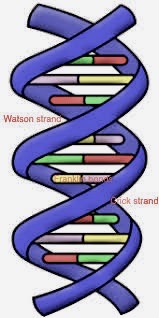
Remarkably, Watson, Crick and Wilkins shared the Nobel Prize for Physiology in 1962 but Franklin was not mentioned. Watson has suggested she should have been included but the Nobel committee have said they do not confer post-humous awards so the fact that she died in 1958 seems to have precluded her to be solidly admitted to the science hall of fame. She is often forgotten but is quite clearly one of the most important women to have ever existed. Later in her career, she worked on viruses and DNA’s intermediary, RNA, for which earned her successor, Aaron Klug, the Nobel Prize in 1982. It would be nice to think that, had she lived to see this, then she would be been rewarded as she deserved. A lecturer of mine used to teach genetics and refer to the two complementary strands as a ‘Watson strand’ and a ‘Crick strand’ so I wonder if there is some way we could acknowledge Franklin in this way. Maybe the ‘Franklin bonds’ to describe hydrogen bonds between bases, which would tell all that the discovery, most probably, would not have occurred had she not been involved.
Franklin bonds – keeping Watson and Crick together
Unfortunately, her description in the book is clearly weighed down with the sexist rhetoric of the time. Although her scientific knowledge and acumen is acknowledged, Watson comments on her being hard to work with and not caring about her appearance. Why should she care about her appearance when she is hard at work making a pivotal discovery?
“By choice she did not emphasize her feminine qualities. Though her features were strong, she was not unattractive and might have been quite stunning had she taken even a mild interest in clothes”
It is also sad to read that they referred to her as ‘Rosy’ which she hated. She wanted to be addressed as Rosalind and made this clear to all she met. Whilst Watson, Crick and Wilkins may have all the glory, I don’t think they can deny the way they spoke about Franklin was not how anybody should be treated. It is upsetting that Watson refers to her as ‘Rosy’ in the book throughout and you get a general feeling of disrespect whenever she is discussed.
In summary, I would recommend you read this book even if you have no understanding of genetics. The book is mainly about the discovery itself and the social impact it has had. It is a tale of caution to all men and their egos. People should be valued by their contributions equally and each contribution should be acknowledged as having arisen from a particular source. Trying to gazump others and stealing the limelight will only make you less popular in the long run.
Has anyone else read this book? What would you say about Watson’s depiction of Franklin? Was it excusable of Wilkins to commandeer her work and ultimately gain from it (he was working on it before her I guess)?
Date – 2019 (Kindle edition, originally 2012 in print)
Length – 172 pages
Stars – 3/5
Blurb
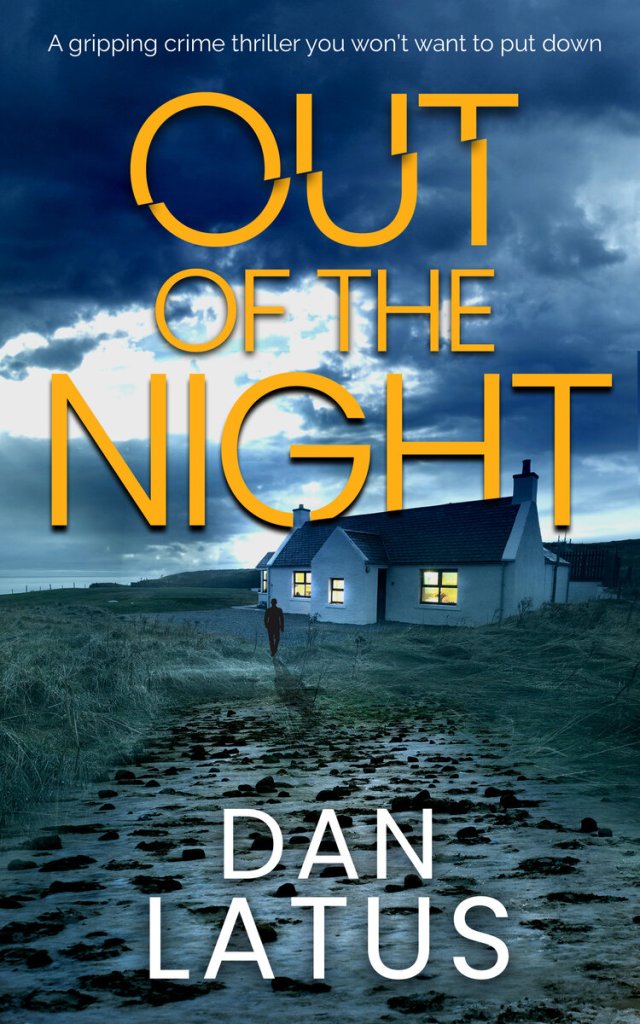
Three mutilated bodies wash up on a beach along the Cleveland coast. The local policeman, Bill Peart enlists the help of Frank Doy, private security consultant.
A woman appears on Doy’s doorstep in the dead of night. Naked, shivering and barely able to speak. He takes her in for food and rest, but in the morning she has disappeared without a trace. Then two extremely unwelcome visitors show up demanding answers. The mystery woman was being followed.
WHO IS THE WOMAN WHO EMERGED OUT OF THE NIGHT?
Doy begins a tireless search for the woman who sought his help. He is sure there is a connection with the disembodied corpses.
A foreign yacht docked near the entrance to a cliffside tunnel and a secretive new arts centre add to the deepening mystery.
The search for one nameless woman leads Doy to a huge underground enterprise that threatens national security and will stop at nothing to achieve their ends.
HOW LONG BEFORE ANOTHER BODY IS FOUND?
Perfect for fans of Lee Child, Matt Hilton, Robert Galbraith and Michael Grant.
Review
I am a sucker for the Kindle “what you may like” function and this was, indeed, the main reason for starting this blog – to get me to read books out of my usual genre and not picked by a computer algorithm.
Nevertheless, “Out of the Night” was an okay read. I find it hard to give it too much of a hard time but if only the book continued with the pace and excitement it started with. The book opens with the discovery of three mutilated bodies on the beach in a rural North-Eastern England location. Frank Doy, a security consultant come ad-hoc detective, is greeted by a naked woman at his front door in the proceeding days. She doesn’t give him any information but he looks after her and she stays the night. When Doy wakes in the morning, she has disappeared and it is only when he notices the contents of his fridge diminishing unusually quickly that he finds she is living rough close-by and sneaking in his house when he is gone. In the meantime, he has been consulted for security advice at Meridian House which is a centre location due to become a new art gallery. These two stories intertwine as it becomes clearer that this woman is being pursued and her life is in grave danger. The plot leads back to Meridian House where there is, of course, more going on than the purveying of art.
What I liked especially
There are plenty of twists and turns and I think, for the first half of the book, Latus keeps the reader gripped very well. The discovery of the bodies and the arrival of the female protagonist is written superbly and I felt like I couldn’t tell what was coming but could keep up with the story. For the first few nights, this book genuinely kept me up late as I was eager to finish a chapter or start the next.
What I didn’t like
Unfortunately, the pace died down somewhat midway and the twist regarding the woman on the run and the goings-on at Meridian House just didn’t quite add up for me. I feel like the book could have been just as good, if not better, if the final twist (SPOLIER ALERT) didn’t make our lady and her captive collaborator a Russian spy, it just completely sidelined me. I’m not sure what others felt, or whether I have missed something important earlier in the story (although generally-speaking if a book is good enough, the reader won’t be asking themselves if they have missed something, I don’t like to leave a review if I feel I haven’t tried my best to understand the story).
Overall
This is the second in a trilogy of Frank Day novels, which I didn’t realise when it came up as a recommended read for me. Without knowing about the characters previous shenanigans, I still found him a likely protagonist and I could certainly get on board with more stories he features in. Overall, the book is well-written, starts well and ends not quite as well and is relatively short meaning the suspense-filled beginning can carry the disappointing ending fairly well. Probably a good holiday or airplane read where you can read it all in one sitting and not lose pace.
Stars – 4/5 (towards the end, 3/5 for the first few stories)
Blurb
“Words, thoughts and manic rantings under the influence of strong drink and fine smoky treats.”
Review
When Layden Robinson contacted me on Twitter to read and review his book, I was really excited. I started this blog in order to read work by indie authors or those who I have never heard of before. My reason being that I am getting a little fed up with the usual stuff that appears on the ‘Recommended for you’ section. For instance, I am currently reading a Dean Koontz novel which I expected to be great however, no matter how well-written it is, it just lacks the punch or intrigue that I was hoping for. Once an author has been established, it seems they can get away with producing any old rubbish as people will buy it purely because of a flashy cover and the name (I am just as guilty as the next person).
Now, when I asked Layden what kind of genre ‘The Havoc Tree’ would fall into, he never answered. I now understand why as there isn’t really a genre that can describe this work. It is a compilation of 10 short stories, which read, to me, more like soliloquies. They are all very dark and macabre with themes of violence, sadism and some well-written sexual content. I won’t lie that I found this a little hard going and couldn’t quite make out a plot in the first few stories but I will admit to being somewhat of a philistine and not being totally familiar with this type of literature. I see there are only good reviews on Amazon and Goodreads so I must be missing something.
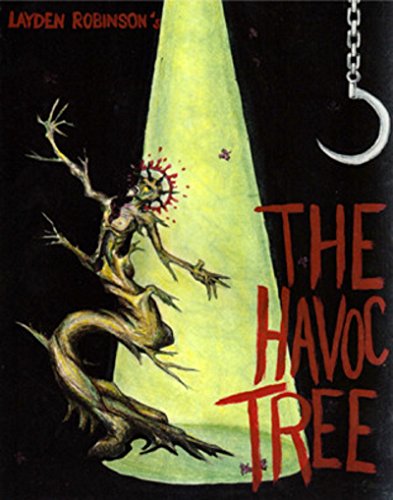
The blurb speaks for itself and captures my thoughts of this book upon immediate reading. The cover is excellent and lets you know what kind of themes to expect in the book.
What I liked especially
My favourite story was ‘Assassination of a Caring Man’. This flowed really well and I think had some deeper metaphorical meaning (be it intended or not). A man who handcuffed himself to his lover is followed by people in white robes who eventually catch up with the couple and I will let you read the rest. I think this was well-written and quite dramatic in parts. I could really feel the main characters anxiety and I felt like the handcuffs were a great visualisation of hand-holding which can sometimes be defensive and protective. There is an element of romance in this story too which I think was adequately developed.
“The Shoes” is another great story. A man finds a dead body and, instead of the normal response of calling the police, he is enamoured with his shoes and takes them for himself. When he wears the shoes, they turn him into a different person and he ends up brutally murdering his barber. He realises it is the shoes to blame but when he tries to get them off, they won’t budge. In a desperate attempt to get back to normality, he is left with no other option than to have his feet sawn off. I concept of this story is brilliant. Haven’t we all gotten swept up into things that we never meant to do and getting out of them is exceedingly difficult?
What I didn’t like
Reviews will always be fair and honest and I do have some bugbears about this book. On the whole it is well-written but there is a fair share of typos. The story about ‘Mr Sacorp’ made no sense to me and it felt like they were just words on a page (many of the words made-up: ‘porp’ and ‘scorp’). He is also described to have a Scandinavian accent but then is reported to have grown up in Luxembourg (of course not in Scandinavia). A little more background to explain the character may have helped rectify this (the book is only 45 pages so is a little brief). I’m also a stickler for words and phrases that don’t make grammatical or etymological sense. In ‘The Shoes’, the protagonist goes for a ‘hair manicure’ and this is mentioned several times. The word manicure, of course, derives from the Latin manibus meaning ‘hand’ so trying to commandeer it in reference to a haircut is rather obscure.
All in all, if you fancy reading something that is entirely different to your usual literature, give The Havoc Tree a go. I wouldn’t have read it if I hadn’t been signposted to it and, on balance, I probably wouldn’t read it again but I think there were some great elements to it. Thanks for asking me to read this Layden, I have enjoyed it.

 The Kindle Book Reviewer