The Worcester Whisperers– review

Author – Kerry Tombs

Publisher – Joffe Books

Date – 2019 (revised and updated, original 2008)

Length – 250 pages

Stars – 5/5

Blurb

A few weeks before the outbreak of the infamous ‘Ripper’ murders in 1888, Detective Inspector Samuel Ravenscroft of the Whitechapel Constabulary is sent to the peaceful county town of Worcester to investigate the unexpected disappearance of the Cathedral librarian and the priceless medieval manuscript known as the Whisperie. Aided by his former colleague, Constable Tom Crabb, Ravenscroft soon encounters a dark world of murder, lies and deceit within the walls of the ancient cathedral, and gradually uncovers an unsolved mystery dating back nearly 40 years. Meanwhile in London, events are nearing a dramatic climax as the mysterious woman in black attempts to gain her revenge in the darkened alleyways of Whitechapel. It is not long before the two contrasting worlds of Worcester and Whitechapel become intertwined in unsettling and frightening ways.

Review

I really enjoyed this book.  I think it really speaks to the author when readers feel compelled to dive straight into the next book in a series.  Following on from The Malvern Murders, we journey back to the midlands with Inspector Ravenscroft for another crime for which he’s really the only mind for the job.  Put aside the fact that there are probably lots of competent police officers in the local area who could have a go at dealing with this situation and accept that Ravenscroft has to take the lead then you’re in for a great ride.

Tombs quite clearly takes inspiration from the classic Sherlockian tale of the Bruce Partington Plans.  An expensive artefact goes missing from a collection and the only person with keys to the room is found dead in a river.  I was initially worried that this was a straight up rehash of Conan-Doyle but, fortunately, Tombs takes us on a different journey fairly early on.  The investigation in Worcester sees Ravenscroft team up once again with Constable Tom Crabb from the Malvern police who just so happens to have been moved to the area.  They take on a likeable relationship again and it’s easy to get behind them.

I didn’t really see the twist coming and I think Tombs does a good job of keeping the reader guessing although there are several possibilities throughout.  The local investigation is told hand-in-hand with some nefarious goings-on back in Whitechapel which Ravenscroft is seemingly unaware of.  This makes for a great backstory and I think this is turning out to be the story arch that connects each book in the series. There is a solid ending with enough of a cliff-hanger to keep you guessing but not too much to leave you dissatisfied.  The love interest is developed into a satisfying conquest which is, thankfully, at odds to what I had expected from the first book.

I seem to have become quite the fan of Kerry Tombs and I see there are more books to follow, which I sure am excited about.

Favourite Character

It’s got to be Mrs Crabb in this book.  She keeps her husband on his toes and takes in the bereft young boy who has just lost his mother (potential spoiler, apologies).

Favourite Word

“Peelers” – a rather endearing term for police officers.  This stems from Sir Robert Peel, the great Lancastrian who created the Metropolitan police and twice served as Prime Minister in the 1800s.  He also gives his name to another popular colloquial term for the police – ‘Bobbies.’
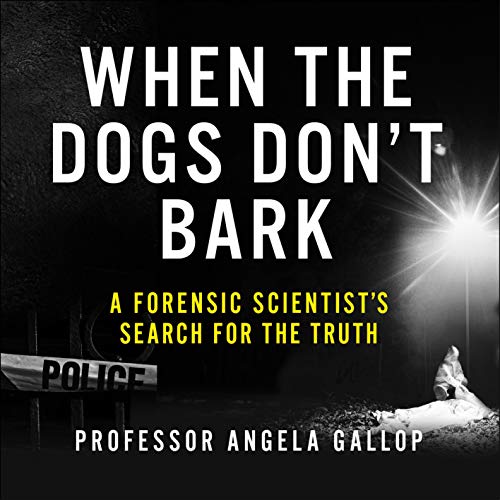
When The Dogs Don’t Bark – A audiobook review

Author – Professor Angela Gallop

Narrator – Sandra Duncan

Publisher – Hodder & Stoughton Ltd

Date – 2019

Length – 10 hours 50 minutes

Stars – 5/5

Blurb

Kathy Reichs meets Fragile Lives in this fascinating and compelling memoir from the UK’s most eminent forensic scientist and some of the most fascinating criminal investigations she has worked on.   

‘Finding the right answers is what forensic science is all about. What often matters even more, however, is asking the right questions.’

Never before has criminal justice rested so heavily on scientific evidence. With ever-more sophisticated and powerful techniques at their disposal, forensic scientists have an unprecedented ability to help solve even the most complex cases.   

Angela Gallop has been a forensic scientist for over 40 years. After joining the Forensic Science Service, the first crime scene she attended was for a case involving the Yorkshire Ripper. As well as working on a wide range of cases in many countries around the world, she is now the most sought-after forensic scientist in the UK, where she has helped solve numerous high-profile cases, including the investigation that finally absolved the Cardiff Three, the Pembrokeshire Coastal Path murders and the killings of Stephen Lawrence, Damilola Taylor, Rachel Nickell and Roberto Calvi.   

From the crime scene to the courtroom, When the Dogs Don’t Bark is the remarkable story of a life spent searching for the truth

Review

I was gripped by the title as, at first glance, I had no idea what it could mean.  Is this a book about dogs?  No, it is not, but the reasoning behind the title becomes clear fairly early on in the book.  I like a title like this that doesn’t quite make sense and forces you to read the book.  In this case, fortunately the book has the goods to back it up.

I have obviously gotten myself into a macabre state of mind having listened to this following All That Remains by Sue Black and, before that, Unnatural Causes by Richard Shephard.  There is something undeniably fascinating about death and dying though.  Professor Gallop is yet another example of a woman who has defied the chauvinistic tendencies of the sciences and made her way to the top of her field.  Arguably the field of forensic science would not be where it is today without her.  Starting her career in Botany and then as a researcher in sea slugs, the field of forensic science seems quite the leap. 

Gallop recounts her biography well and keeps the reader interested without giving too much information that would just bore.  She recounts some of the obstacles she has had to overcome to make headway in her field and her story is truly remarkable. It is easy to watch CSI and other such programmes and think that forensic science is automated and, with DNA, a perpetrator has to be pretty smart to evade detection.  To some extent this may be true but I imagine that, even in today’s technological epoch, much care and attention to detail is required.  Gallop explains the development of forensic science before DNA became a readily available and testable being. 

Most importantly, the author has been involved in several high-profile cases.  Her first case was a victim of the Yorkshire Ripper but, namely, she was involved in the investigation of the murders of Stephen Lawrence and Damilola Taylor.  I remember these cases in the media and the sheer amount of error and misreporting was never evident to me.  Gallop explains the cases extremely well and the issues around racisms and police practise become glaringly and painfully obvious.  These cases just prove as examples of how forensics is so important in convicting the right person for the right crime. 

There aren’t many elements of humour but who would expect that from a book about murder.  Although there is one story which entertained me.  Fairly early on in her career, she recounts a case where a man is admitted to hospital with abdominal pain.  The surgeons find a peculiar fluid in his abdomen which perplexes everyone.  Gallop’s expertise are called upon and the fluid is eventually determined to be semen of porcine derivation.  Who would have thought bestiality could be light-hearted?

In summary, this is a fantastic book.  Dark in parts but informative and evocative.  I would certainly recommend reading or listening to this book particularly if you have a penchant for death and dying like I seem to have developed.

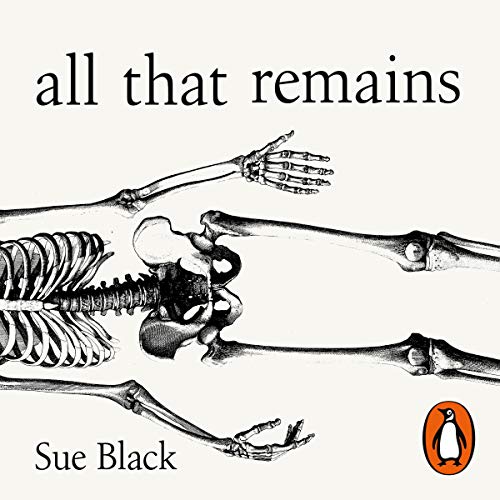
All That Remains – A audiobook review

Author – Professor Dame Sue Black

Narrator – Professor Dame Sue Black

Publisher – Random House Audibooks

Date – 2018

Length – 11 hours 20 minutes

Stars – 5/5

Blurb

Random House presents the audiobook edition of All That Remains by Professor Sue Black, read by the author. 

Sue Black confronts death every day. As Professor of Anatomy and Forensic Anthropology, she focuses on mortal remains in her lab; at burial sites; at scenes of violence, murder and criminal dismemberment; and when investigating mass fatalities due to war, accident or natural disaster. In All That Remains, she reveals the many faces of death she has come to know, using key cases to explore how forensic science has developed and what her work has taught her. 

Do we expect a book about death to be sad? Macabre? Sue’s book is neither. There is tragedy, but there is also humour in stories as gripping as the best crime novel. Our own death will remain a great unknown. But as an expert witness from the final frontier, Sue Black is the wisest, most reassuring, most compelling of guides.

Review

Being of scientific inclination and background myself, when I saw All That Remains and read the blurb, I knew instantly that this was a book for me.  Professor Dame Sue Black is a forensic anthropologist and, like many of you, I had no idea what such a field entailed.  I had heard of anthropology and forensics, of course, but the two together was new to me.  It turns out that they actually play an important role in the discovery and investigation into some of the most heinous crimes.   They’re not just researcher who look at old rotten bodies but they get hands on at the scenes of the most awful natural (and in more unfortunate case man-made) disasters in victim identification.

As the summary and title suggest, you might think that this book would be rather gruesome or lurid.  I especially like the word macabre as is started in the summary, not a word you hear or see often but seems to cut directly into its meaning.  Surprisingly, I didn’t find this book as ghastly as expected and it was full of interesting and gripping accounts of cases the author has worked on.  She vividly retells her story of being called out to Kosovo in 1999, during the Kosovo-Serbia war, where she led disaster victim identification.  She recounts one particularly moving story of a man who was driving with his family.  All of his family members were shot and killed but in such a barbaric manner (if shooting another human isn’t barbaric enough) that they were unrecognisable as mere body parts.  It was their belief and cultural norm that people must be buried as one after death to ensure a safe passage to the afterlife.  Black and her team proved instrumental in identifying the remains and allowing the bereft husband and father to put his loved one to rest.  This story really got me and highlights how a job, such as that of a forensic anthropologist, may seem unimportant or lacking societal impact however this could not be further from the truth.   People are quick to that the doctor who has administered antibiotics in a timely manner to save a life but are less inclined to appreciate the efforts, struggles and sacrifices of others whose efforts often go unnoticed or work in such a field that is viewed as sad or upsetting.

A more light-hearting tale is about a local man in Dundee who had an obsession with donating his body to medical science.  These people always amaze me.  They make a conscious decision to advance science and train the doctors, surgeons, dentists and others of the future.  I have had the privilege to be taught with cadaveric dissection at medical school and often wondered what my body would have been like in life.  For Black, this truly happened where she knew this man for a long time who wanted to donate his body and eventually did.  It must have been a surreal experience to say the least.  

I do have one point of contention though.  Black talks about her wishes with regards to the end of her own life and the things she would and would not want to be done.  It is hugely important that we all think about this as death comes to us all.  I value that she has had the courage to talk about this in her book and think she sets a great example.  My bugbear is with her description of the dying patient being hooked up to drips and medications. She says she would want to experience death in its entirety without any clouding of her thoughts or judgements.  I can relate to this and maybe it is just the way it is written.  If you have ever been by the side of a dying patient who has intractable pain from a large abdominal mass, for instance, you would know that the syringe driver with morphine is not there for show, it truly is there to relieve symptoms that would be unbearable otherwise.   Yes, not having any medications would be great but I think it is a little naïve, and in some ways insulting, to make a suggestion that sounds like there would be an option for some patients.  It is somewhat akin to childbirth I suppose.  Yes, a drug-free birth is ideal but there should be no shame placed upon those who opt for analgesia when they are in labour.  I would be interested to hear anyone else’s thoughts on the matter?

All in all, this book was incredibly informative and well-written.  What else would you expect from someone who is not only a Professor but also a Dame?  I know a title shouldn’t sway your thoughts on a book but that is some achievement.

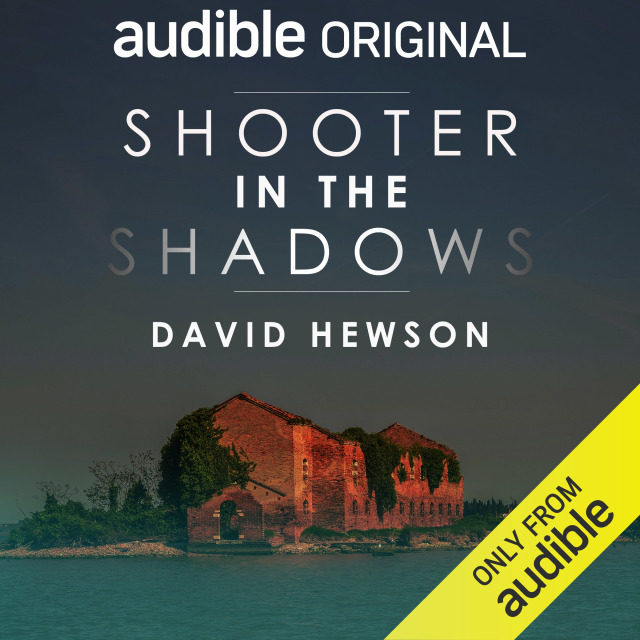
Shooter in the Shadows – An audiobook review

Author – David Hewson

Narrators – Jonathan Davis and Ramon de Ocampo

Publisher – Audible Original

Date – December 2019

Length – 10 hours 30 minutes

Stars – 4.5/5

Review

I am fairly new to Audible having subscribed for the last 5 months and listened to 5 books so far.  I am still making my mind up as to whether audiobooks are for me.  I struggle to keep up sometimes and find myself distracted but still I have enjoyed this latest novel.

Shooter in the Shadows is a crime thriller and bases itself around a journalist come author, Tom Honeyman.  The book reads in two different times in two separate places.  Present day in Venice and many years previously in New York.  The book centres around a tragedy that took place in New York, Honeyman’s hometown, resulting in the death of a teacher and a student at a local school. Honeyman has written a book about the tragedy which places a local fireman very much in the limelight.  So much so that this unfortunate fellow is killed when the police come to arrest him.  The public seem to take the media’s word for it that the police got the right guy.

Fast forward a few years later.  Honeyman has made a good amount of money selling the story but his relationship with his daughter is still fractious since his wife’s apparent suicide in the interim.  Honeyman finds himself held hostage on a remote Italian island by a man who talks to him through a walkie-talkie and is able to hack into his computer.  His captor seems to know things that he shouldn’t.  Insider knowledge you might say which becomes the undoing of Honeyman.  He is tasked to write a new story with ‘the truth’ and has only four days to do so whilst his daughter is also held hostage by the same man.

There is a cracking twist in this story that I didn’t see coming.  At points it had me on the edge of my seat and, at times, I would finish my journey home from work but be sat in my car for another 20 minutes outside my house whilst the chapter finished. It really hooked me.  Well written and the characters are developed nicely with thorough backstories.  There is also a nice glimpse into the life of a writer and the struggles in getting published as told by Honeyman.  I thought this was a great way for the author to draw on his own experience and add to the authenticity of the story.

I think some credit needs to go to the narrators too and Audible for editing this work into such a compelling listen.  The narrators are able to capture you from the very first chapter and keep you listening.  If all audiobooks were this exciting, I think I would more inclined to listen to them.

Overall, an excellent listen! Has anyone else listened to it? Let me know your thoughts.

Dry January Day 7 – A Beer Review

Seven days on and still going strong. Rather than blog daily about my abstinence which would make for terrible reading, I thought it apt to review a beer. Not my usual kind of review but why not?

Every just get a craving for the refreshing taste of an ice cold beer?  I do and, even more so now I am in the depths of Dry January.  Not that I’m craving drunkenness or drowning any sorrows.  I think I genuinely enjoy the taste of beer which is, of course, can be dangerous.

I have decided to try a non-alcoholic beer tonight.  Never really bought into the idea before and had always preferred a coke if driving or not able to have a beer. 

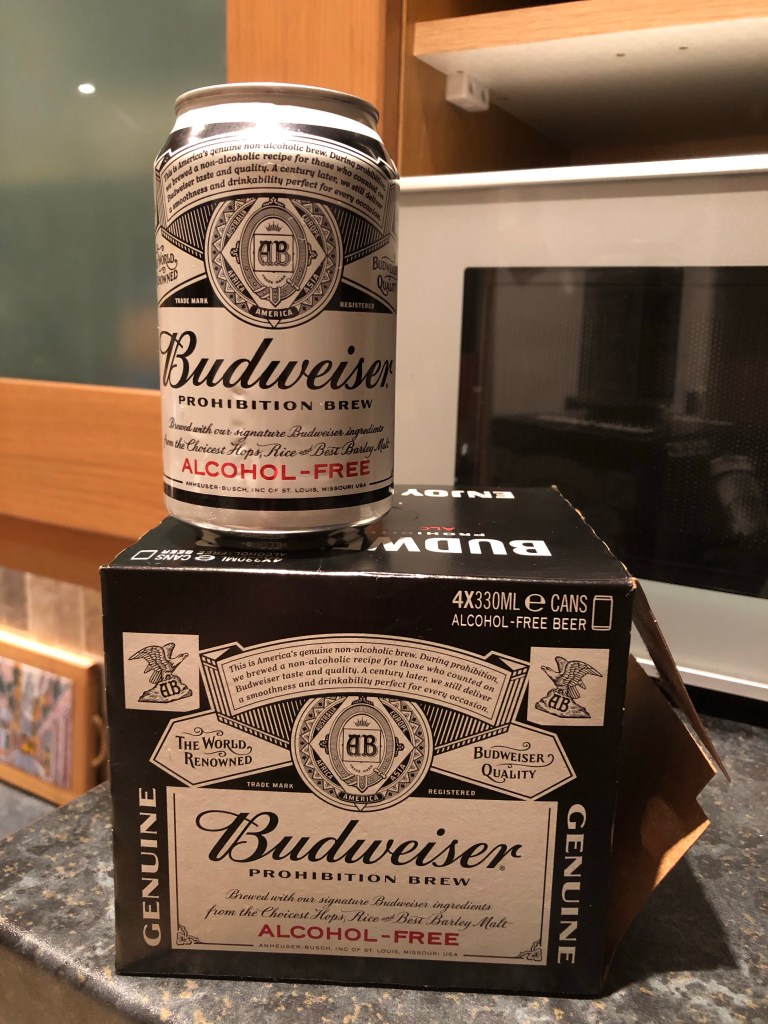
Budweiser Alcohol Free is actually just the tipple I needed.  It has everything about it that the regular Budweiser provides and I could even be fooled I was drinking alcohol.  The only give away is I feel no different after a few cans and I wake up sprightly in the morning.  Sweet notes initially on the tongue then a more full-bodied bitter note on the palate. Just fizzy enough to be refreshing but not too much to make me think I’m drinking lemonade.

Surely, a winner all round and I think I might take to drinking it more often.  Whilst perusing the non-alcoholic section in my local supermarket, I noticed a huge selection with some of my favourite IPAs having non-alcoholic editions.  I’m excited to give them a try. 

Does anybody have any recommendations for non-alcoholic beer?

The History of Alcohol – Dry January Day 5

Yes, I am still on the wagon for Dry January.  I have to say it was quite difficult this weekend to avoid having a drink.  Friday and Saturday nights seem to be a standard drinking evening so it’s a bit strange to reach for a lemonade instead.  Honestly, I do think I am sleeping better and I am probably more productive. 

The history of alcohol is interesting and dates back to 7000BC in China where rice wine jars have been found in Jiahu.  There is something rather paradoxical about the Chinese being the first known drinkers as a genetic perk means many of them have difficulty metabolising alcohol.  Alcohol is broken down into acetylaldehyde and then acetic acid by two separate enzymes:

A screenshot of a cell phone

Description automatically generated

Figure 1: Alcohol metabolism

As you can see from the figure, acetylaldehyde is the intermediate chemical and that is the stuff that causes hangovers and all of the detrimental side effects of alcohol (except addiction / dependence – that’s due to the alcohol itself).  People with genetic changes in the gene for alcohol dehydrogenase (ADH) can have a significantly increased rate of metabolism so the alcohol is broken down very quickly.  This means they experience little of the psychological / behavioural effects of drunkenness and often display facial flushing due to the acetylaldehyde production. 

In 50% of East Asians, a mutation in the gene for a second enzyme, acetylaldehyde dehydrogenase (ALDH), means the enzyme works very slowly and so acetylaldehyde lingers in the body a lot longer.  This causes symptoms similar to a hangover and is, of course, very unfortunate, for those who carry it.  

Interestingly, a drug called Disulfiram can be used to treat alcohol dependency.  This works by inhibiting ALDH and causing build-up of acetyladehyde, making drinking alcohol so intolerable that people stop.  A bit of a barbaric way to treat it but it has shown some success, nevertheless.  Moreover, having the ADH variant (meaning rapid break down of alcohol) has been associated with a lower risk of developing alcoholism, presumably due to a lack of psychoactive effect and possibly facial flushing (why carry on drinking if you don’t get any of the benefits and just feel the side effects?.

So why has this genetic variant arisen in East Asian individuals only? There has been suggestion that this all comes down to rice cultivation which seems to have occurred around 12 000BC to 8000BC.  Having the ADH variant may have been selected for over evolutionary time as those with the variant were likely not to become alcoholics.  Maybe the Chinese fermented rice to store it and keep it for longer, the production of alcohol was just a by-product.  To me, this seems a bit far-fetched but the propagation of the ADH and ALDH variants is unlikely to have arisen by genetic drift as they occurred for the first time around 10 000 years ago so something must have driven it.  I suppose we will never know but the ADH / ALDH example shows how genetic elements can modify our risk of dependency and its subsequent negative health effects.

Anyway, that’s a digression.  Five days in and still keen to keep going.  How are others getting on?  Has anyone started with a New Year resolution and struggling?

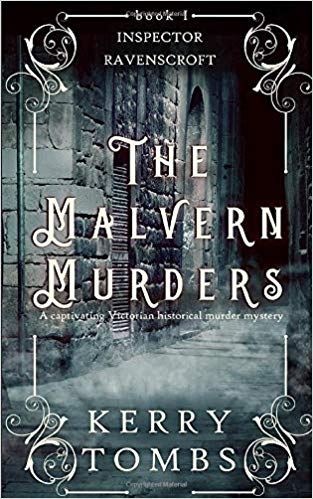
The Malvern Murders – review

Author – Kerry Tombs

Publisher – Joffe Books

Date – 2019 (revised and updated, original 2006)

Length – 207 pages

Stars – 5/5

Review

Over the Christmas period, I had more time than usual to read and managed to get myself absorbed in a few brilliant books.  The Malvern Murders was another book I found by chance whilst scrolling for crime fiction.  I was intrigued by the book cover which I know you should never judge but everyone always does.  At the time I was keen to read this as there were no other reviews on Kindle so I was really going in blind. I see many others had the same thought as there a now a few ratings, all good I may add.

This Victorian detective novel conjures thoughts and imagery of a classic Holmes story but Tombs definitely celebrates his own flare for the genre.  This is the first instalment in the Detective Ravenscroft series which I’m glad to read as this left me wanting more.

Detective Ravenscroft is a Whitechapel policeman who, due to a faltering performance, is sent to Malvern by his superior to experience the Water Cure.  I had never heard of this before but, sure enough, it is a real folks tale relating the Malvern water, which you can buy bottle in most good shops and apparently has healing properties.  Of course, whilst undergoing such treatment, Ravenscroft finds himself swept up in a murder case.  There are many twists and turns and the real killer was not obvious to me but is hidden in plain sight.  

My only slight reservation is a love interest which feels a little undercooked. Maybe this is to flourish in the next story so I will reserve any criticism.

Favourite Character

Stebbins

The clerk in Malvern at the Tudor Hydropathic Establishment, where Dr Mountcourt oversees Ravenscroft Water Cure treatment.  An endearing character but I’m a little perplexed as to why I seem to have him speaking like the Artful Dodger when he is from the Midlands. He proves to be a helping hand for our protagonist and made the story just that little bit more real and relatable.

Favourite Word

Tontine

An agreement whereby multiple parties agree to pay a sum into a fund and thereafter receive a set annuity.  As the members of the group die, their shares devolve to the other participants.

I had never heard this word before this book but, as is usual with these things, have heard it at least twice on the TV in the last week since finishing reading this book.

Recommendation

Get it read! I am already reading the second instalment by Tombs and thoroughly enjoying it!

Dry January – Day 1

“It’s 6 o’clock somewhere”

Who’s every used this excuse before?  Not sure when or how 6pm became a socially acceptable time to crack a beer but it’s what I’ve grown up with.  I have excused myself many times with this.  If it’s past 6pm then there’s no problem.  If I can see other people drinking on social media then there’s no problem either.  I need to stop living by other people’s standards maybe.

Now nearly 48 hours without alcohol.  This probably makes for pretty drab reading but the very act of writing this means I have to keep going.  Thankful for any support and I am glad to read others who are embarking on the same journey.

Got to be careful not to replace alcohol with coffee though.  Seems that I just want to ingest some sort of mind-altering substance, maybe I should be happy with the way things are. 

Don’t worry, I’m nearing the end of my next book and have another review I’m working on.  This won’t just become a sobriety blog. If you’re also going dry for January though, give us a like.

Continue reading “Dry January – Day 1”

Dry January – Day 0

Temperance – a Christian virtue to moderate and balance the use of created goods. Later to be known as abstinence from alcohol.

The word temperance is, indeed, a Christian virtue but became particularly important in the 19th and 20th centuries when society started to think twice about alcohol.  Temperance Bars, that served only non-alcoholic beverages, were a common feature to the high street in those days and, most importantly, were the first outlets to serve Coca-Cola and other classics (Dandelion and Burdock is a personal favourite).  Can’t say I am religious myself but find the idea of temperance intriguing and is a virtue that I will strive to, nonetheless. 

It’s January 1st and the first day of complete sobriety (I will count as day 0). Can’t say I have had any troubles, as yet, but I am well aware that the initial motivation to make a change can fizzle out after a few days or so. I was planning on one last hurrah last night for NYE but, unfortunately, as soon as I popped my first Heineken, my 18 month Kind Charles Spaniel was sick everywhere. We called off our night and stayed in to look after the poor devil. So for a New Years Day, it’s been quite a relief not to have a hangover.

Continue reading “Dry January – Day 0”

Dry January – Day -1

New year, new me?

Disclaimer: I have highjacked this review site to post other stuff.  Just enjoying writing at the moment.  Still reading though and reviews to follow.

I have decided to attempt Dry January this year.  This means going alcohol free for 30 days.  The reason I am writing this blog is that I have attempted this before and never succeeded.  Writing my thoughts and knowing people can read them will give me the impetus I need to succeed…I think.

I wouldn’t call myself an alcoholic but then again who would?  I have fallen into bad habits and have found myself drinking at home quite a bit.  Most evenings and what makes it worse is that my wife is pregnant and I should really be supporting her.  I’ve never had an eye opener or run into trouble because of drinking.  It’s not an overwhelming urge to be intoxicated that has been my undoing previously, it is just very easy for me to make excuses and fall off the wagon. 

I’m hoping that going alcohol free will result in some health benefits.  Maybe I will have more energy and become more productive.  I am open to the idea, also, that I feel no different and that come February I will be keen to sink a few Innis & Gunn as dawn arises.  I wondered if anyone else was planning this?  My reason for posting a day early is to see if anyone has any tips or hints about previous experience.  Share you story as it will undoubtably help others.

Keep an eye on my blog as I aim to update daily.  Thanks for your support.

Design a site like this with WordPress.com
Get started